In the United States, the concept of subliminal advertising has been a topic of interest and controversy for several decades.
What is subliminal advertising?
Subliminal advertising refers to the practice of embedding hidden messages or stimuli within advertisements or other forms of media, with the intention of influencing the audience’s subconscious mind without their awareness.
The idea gained widespread attention in the 1950s and 1960s, with claims that advertisers were using techniques such as briefly flashing images or words during a commercial or embedding hidden messages within audio tracks. These messages were believed to bypass the conscious mind’s filtering mechanisms and directly influence the subconscious, potentially leading to desired outcomes such as increased product sales or brand loyalty.
However, in the late 1950s, concerns about the potential effects of subliminal advertising led to public outcry and calls for regulation. In response, the National Association of Broadcasters (NAB) and the American Association of Advertising Agencies (4A’s) both adopted voluntary codes of conduct prohibiting the use of subliminal techniques in advertising.
Additionally, in 1974, the Federal Communications Commission (FCC) issued a statement declaring that the use of subliminal advertising was “contrary to the public interest” and could result in the loss of broadcast licenses. This statement effectively banned the use of subliminal advertising on radio and television in the United States.
Despite these regulations, the debate over the effectiveness and ethics of subliminal advertising continues in the United States. While some studies have suggested that subliminal stimuli can have subtle effects on behavior under certain conditions, others argue that the impact is minimal and that the risks of manipulation are overstated.
4 Examples of subliminal advertising
1. McDonald’s
2. “Tinkerbell” in Disney Films:
It’s been suggested that Disney may have used subliminal messaging in some of their animated films. For example, in the film “Peter Pan,” there’s a scene where Tinkerbell appears to flash in a way that some viewers interpret as resembling a woman’s figure. While Disney denies any intentional use of subliminal messaging, these instances have sparked speculation and debate.
2. “Enjoy Coke” in Movie Theaters
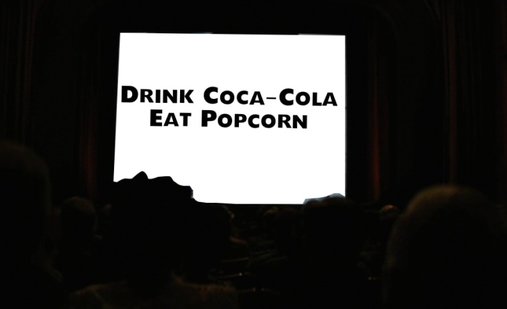
In the 1950s, market researcher James Vicary claimed to have conducted an experiment where he inserted subliminal messages (specifically “Eat Popcorn” and “Drink Coca-Cola”) into a movie shown in a theater. Vicary asserted that these messages led to increased sales of popcorn and Coke. However, there is significant skepticism surrounding the validity of Vicary’s claims, and subsequent research has failed to replicate his results.
3. “Rats” in Ice Cubes
In 2006, an advertisement for a vodka brand called Absolut sparked controversy when some viewers noticed what appeared to be the word “rats” subtly spelled out in the ice cubes depicted in the ad. While the company claimed it was unintentional, the incident reignited debates about the use of subliminal messaging in advertising.
4. Subliminal Messages in Political Ads
There have been allegations of subliminal messaging in political advertising as well. For example, during the 2000 U.S. presidential election, supporters of Al Gore claimed that a campaign ad for George W. Bush briefly flashed the word “RATS” over a still image of Gore. The Bush campaign denied any intentional use of subliminal messaging.
Types of subliminal advertising
1. Visual Subliminal Messages
Visual subliminal messages involve embedding hidden images, words, or symbols within advertisements that are not immediately noticeable to the conscious mind but can still be perceived by the subconscious. These messages are typically integrated into the visual elements of an advertisement, aiming to influence viewers’ perceptions or behavior without their awareness.
Examples of visual subliminal messages in advertising campaigns might include:
1. Coca-Cola Ice Cubes: Embedding the word “Coke” or the Coca-Cola logo subtly within the ice cubes depicted in a soft drink commercial.
2. Hidden Logos: Integrating a brand logo into the background of an advertisement, such as a car manufacturer subtly incorporating its logo into the scenery of a driving scene.
3. Subtle Branding: Using product packaging or design elements in such a way that they form hidden messages or symbols when viewed from a certain angle or perspective.
4. Negative Space: Utilizing negative space within an advertisement to conceal messages or images that are only perceptible upon closer inspection.
5. Double Exposure: Overlapping images or using transparency effects to create hidden visual messages or associations within an advertisement.
In summary, visual subliminal messages is a type of subliminal advertising that involves embedding hidden images, words, or symbols within advertisements that are not immediately noticeable to the conscious mind but can still be perceived by the subconscious. For example, a brand logo might be subtly integrated into a background image or disguised within complex visual elements.
2. Auditory Subliminal Messages
Auditory subliminal messages involve embedding hidden sounds or spoken words within audio tracks of advertisements that are played at a volume too low to be consciously heard but may still be processed by the subconscious mind. These messages aim to influence listeners’ perceptions or behavior without their awareness.
Examples of auditory subliminal messages in advertising campaigns might include:
1. Whispered Messages: Incorporating whispered messages within the background music or ambient sounds of a commercial, conveying subtle suggestions or associations related to the advertised product or brand.
2. Backward Masking: Reversing certain words or phrases and embedding them within the audio track of a commercial. While not commonly used due to ethical concerns and regulatory scrutiny, backward masking purportedly aims to influence subconscious perceptions or behaviors.
3. Low-Volume Messages: Playing spoken messages at a volume that is just below the threshold of conscious perception, ensuring that listeners are not consciously aware of the messages but may still process them subconsciously.
4. Subtle Sound Effects: Using subtle sound effects or tones that evoke specific emotions or associations without being consciously perceived by listeners. These sound effects may be strategically placed within the audio track to enhance the overall impact of the advertisement.
5. Inaudible Frequencies: Incorporating high or low-frequency tones that are beyond the range of human hearing but may still influence subconscious responses or behaviors.
3. Rapid Image Flashes
Rapid image flashes involve briefly displaying images or words during a commercial or film in a way that they are not consciously registered by viewers but may still influence their subconscious. These subliminal messages are presented for such a short duration that they bypass conscious perception but may still have an impact on viewers’ attitudes or behaviors without their awareness.
Examples of rapid image flashes in advertising campaigns might include:
1. Subliminal Frames: Inserting single frames of images or text within the video content of a commercial at a speed that is too fast for viewers to consciously perceive. These frames may contain messages or symbols that are intended to evoke specific associations or reactions.
2. Hidden Symbols: Integrating subtle visual cues or symbols into scenes or backgrounds of advertisements that are only visible for a fraction of a second. These symbols may be strategically placed to reinforce key themes or messages of the advertisement.
3. Product Integration: Briefly displaying images of products or brand logos within a commercial in a way that they are subliminally processed by viewers. These rapid product placements aim to increase brand recognition or influence purchase intentions without viewers consciously noticing the placement.
4. Quick Text Flash: Flashing brief textual messages, such as slogans or brand names, within the video content of a commercial. These messages are presented at a speed that prevents conscious recognition but may still be processed by the subconscious mind.
5. Image Overlay: Overlaying images or text onto existing video content in a way that they are visible for only a fraction of a second. This technique is often used to convey additional information or messages without disrupting the flow of the advertisement.
in summary;
Rapid image flashes is a type of subliminal advertising that involves briefly flashing images or words during a commercial or film in a way that they are not consciously registered by viewers but may still influence their subconscious. However, this practice is controversial and heavily regulated, and its effectiveness in advertising is debated.
4. Sensory Manipulation
Sensory manipulation in subliminal advertising involves leveraging specific sensory experiences to influence perceptions or behaviors without conscious awareness. This type of subliminal advertising taps into the subconscious associations individuals have with certain sensory stimuli, such as colors, scents, textures, or even tastes, to subtly shape their responses to advertisements.
Examples of sensory manipulation in advertising campaigns might include:
1. Color Psychology: Using colors strategically in advertisements to evoke subconscious emotions or associations. For instance, using warm colors like red and yellow in fast-food advertisements to stimulate appetite or urgency, or using calming colors like blue and green in advertisements for relaxation products.
2. Scent Marketing: Incorporating specific scents or fragrances into advertisements to trigger emotional responses or memories. For example, using the scent of fresh-baked cookies in a commercial for home products to evoke feelings of comfort and homeliness.
3. Texture and Material Choice: Selecting textures or materials for product packaging or advertisement backgrounds that convey subconscious messages about quality, luxury, or durability. For instance, using smooth, glossy textures in advertisements for high-end electronics to suggest sophistication and modernity.
4. Taste Imagery: Describing food or beverage products in a way that evokes sensory experiences through language, such as using words like “crisp,” “juicy,” or “refreshing” to appeal to the subconscious senses of taste and texture.
5. Audiovisual Harmony: Aligning visual and auditory elements in advertisements to create a harmonious sensory experience that reinforces brand messaging. For example, using calming music and nature imagery in advertisements for wellness products to evoke a sense of tranquility and relaxation.
These examples demonstrate how sensory manipulation can be used in advertising to subtly influence consumer perceptions and behavior by appealing to subconscious sensory associations. However, it’s important to note that the effectiveness and ethical implications of sensory manipulation techniques in subliminal advertising remain subject to debate and scrutiny.
5. Implicit Associations
Implicit associations in subliminal advertising involve leveraging unconscious biases, stereotypes, or associations that individuals hold to influence their perceptions or behaviors without their conscious awareness. This type of subliminal advertising aims to tap into deep-seated beliefs or cultural norms to shape consumer attitudes toward products or brands.
Examples of implicit associations in advertising campaigns might include:
1. Celebrity Endorsements: Associating a product or brand with a well-known celebrity or influencer whose image evokes certain positive qualities or values. Consumers may unconsciously transfer their admiration or trust for the celebrity onto the endorsed product.
2. Cultural Symbols: Incorporating symbols or imagery in advertisements that tap into cultural stereotypes or archetypes to evoke specific associations or emotions. For example, using images of family gatherings or holiday celebrations to evoke feelings of warmth and togetherness in advertisements for food products.
3. Social Norms: Portraying certain behaviors or lifestyle choices as socially desirable or normative in advertisements. This can create implicit pressure for consumers to conform to these ideals without consciously realizing the influence.
4. Subtle Persuasion: Using subtle language or framing in advertisements to influence perceptions or behaviors without explicitly stating a message. For instance, framing a product as “limited edition” or “exclusive” can create a sense of scarcity and urgency, driving consumers to make purchasing decisions without consciously analyzing the rationale.
5. Emotional Appeals: Eliciting specific emotional responses, such as fear, nostalgia, or desire, through imagery, music, or storytelling in advertisements. These emotional cues can influence consumer attitudes and preferences at a subconscious level.
in summary,
Subliminal advertising can exploit implicit associations or biases that individuals hold unconsciously. For example, associating a product with images of happiness or success might tap into subconscious desires for those outcomes.
Kindly note that while all the aforementioned types of subliminal advertising techniques have been discussed and theorized, there is limited evidence to suggest that they are widely used or effective in the United States.
Additionally, regulatory bodies such as the Federal Trade Commission (FTC) closely monitor advertising practices to ensure that they comply with laws and ethical standards, which typically prohibit deceptive or manipulative tactics. As a result, advertisers are generally cautious about employing subliminal techniques in their campaigns.
Advantages of Subliminal Advertising

1. Subconscious Influence
one of recognized advantage of subliminal advertising is that it purportedly has the ability to influence consumer behavior at a subconscious level, bypassing conscious resistance or skepticism. Advocates argue that by targeting the subconscious mind, advertisers can create lasting impressions and influence purchasing decisions without consumers being fully aware of the persuasive techniques being used.
2. Enhanced Brand Awareness
Subliminal messages embedded within advertisements may lead to increased brand recognition and awareness. Proponents argue that even if consumers do not consciously perceive the messages, repeated exposure to subliminal stimuli can create subconscious associations between the brand and positive attributes, leading to increased brand recall and preference.
3. Behavioral Conditioning
Subliminal advertising techniques may be used to condition consumers to associate certain stimuli with desired behaviors or outcomes. Advocates argue that by pairing subliminal messages with specific actions or emotional responses, advertisers can shape consumer behavior over time, leading to increased sales and brand loyalty.
4. Creative Freedom
Subliminal advertising techniques offer advertisers a creative and innovative way to convey messages and influence consumer perceptions. Proponents argue that subliminal techniques allow advertisers to communicate complex ideas or associations in a subtle and engaging manner, enhancing the overall effectiveness of advertising campaigns.
5. Cost-Effectiveness
Another key advantage of subliminal advertising is that it may be perceived as a cost-effective means of advertising, as it does not necessarily require additional resources or production costs compared to traditional advertising methods. Advocates argue that by leveraging subconscious messaging techniques, advertisers can achieve significant results with minimal investment.
Disadvantages of subliminal advertising
1. Ethical Concerns
One of the primary criticisms or disadvantages of subliminal advertising is the ethical dilemma it poses. Critics argue that subliminal techniques involve manipulating individuals’ subconscious minds without their consent, which raises questions about autonomy, transparency, and respect for consumer choice.
2. Lack of Transparency
Subliminal messages are designed to be subtle and hidden from conscious awareness, which means that consumers may not be aware of the persuasive techniques being used to influence their behavior. This lack of transparency undermines the principles of informed decision-making and consumer empowerment.
3. Questionable Effectiveness
Despite claims about the effectiveness of subliminal advertising, empirical evidence supporting its impact on consumer behavior is often inconclusive. Many studies have failed to demonstrate consistent and reliable effects of subliminal stimuli on purchasing decisions, brand preferences, or other desired outcomes.
4. Potential Backlash
Another disadvantages of subliminal advertising is that if consumers become aware of subliminal advertising techniques being used in marketing campaigns, it can lead to backlash and negative perceptions of the brand. Trust and credibility may be compromised if consumers feel manipulated or deceived by hidden messages in advertisements.
5. Regulatory Restrictions
Many countries have regulations in place to restrict or prohibit the use of subliminal advertising due to concerns about its potential to manipulate consumers without their consent. Advertisers may face legal consequences or reputational damage if they are found to be in violation of these regulations.
6. Unintended Consequences
Subliminal messages can be misinterpreted or have unintended consequences, leading to undesirable outcomes for advertisers. For example, an attempt to create positive associations with a brand through subliminal messaging may backfire if consumers perceive the messages as manipulative or deceitful.
Frequently Asked Questions
The legality of subliminal advertising varies depending on the country and jurisdiction. In some places, there are specific laws and regulations that govern the use of subliminal advertising, while in others, it may be subject to general advertising standards and guidelines.
In the United States, subliminal advertising is generally considered legal but heavily regulated. The Federal Communications Commission (FCC) has stated that broadcasting subliminal messages is “contrary to the public interest” and may result in the loss of broadcast licenses. Additionally, the Federal Trade Commission (FTC) has the authority to take action against deceptive advertising practices, including those involving subliminal techniques.
While there is no specific federal law banning subliminal advertising, broadcasters and advertisers are subject to regulatory scrutiny and could face penalties if found to be in violation of FCC or FTC regulations. Furthermore, individual states may have their own laws and regulations governing advertising practices.
In other countries, such as the United Kingdom and Australia, subliminal advertising is explicitly prohibited by law. Advertising standards authorities in these countries enforce regulations that prohibit the use of subliminal techniques in advertising, and advertisers found to be in breach of these regulations may face fines or other penalties.
Above all, while subliminal advertising may not always be explicitly illegal, it is generally subject to strict regulations and scrutiny from regulatory authorities. Advertisers are advised to adhere to ethical standards and transparency in their marketing practices to avoid potential legal issues and maintain consumer trust.
What is the fear addressed by Wilson Bryan key’s notion of subliminal advertising?
Wilson Bryan Key’s notion of subliminal advertising primarily revolves around the fear that advertisers and mass media outlets are using hidden messages or stimuli to manipulate and control consumer behavior without individuals being consciously aware of it. Key argues that these subliminal messages, often embedded within advertisements or media content, can bypass rational thought processes and directly influence the subconscious mind, leading to desired outcomes such as increased product sales or brand loyalty.
Key’s work, notably outlined in his book “Subliminal Seduction,” suggests that advertisers strategically employ subliminal techniques to exploit consumers’ deepest desires, fears, and insecurities. He contends that these hidden messages can tap into subconscious urges and emotions, shaping consumer preferences and behaviors in ways that individuals may not consciously recognize or understand.
In summary, the fear addressed by Wilson Bryan Key’s notion of subliminal advertising is the concern that individuals are being manipulated and controlled by powerful forces within the advertising and media industries, with implications for personal autonomy, free will, and societal well-being.
The history of subliminal advertising
Once upon a time in the mid-20th century, a curious market researcher named James Vicary claimed to have discovered a remarkable secret. In a darkened movie theater, he conducted an experiment that would captivate the world. With a flicker of light too fast for conscious perception, he purportedly inserted subliminal messages into the film, urging viewers to “Drink Coca-Cola” and “Eat Popcorn.” Astonishingly, he reported significant increases in sales of these products.
News of Vicary’s experiment spread like wildfire, igniting a frenzy of speculation and fear. People were captivated by the idea that hidden messages could sway their behavior without their knowledge. The media sensationalized the story, and concerned citizens demanded answers.
Amidst the uproar, regulatory bodies like the Federal Communications Commission (FCC) stepped in to investigate. They issued stern warnings against the use of subliminal advertising, declaring it contrary to the public interest. The spotlight was on, and advertisers found themselves under scrutiny like never before.
As the dust settled, researchers delved deeper into the mysteries of subliminal perception. Some studies suggested that subliminal stimuli could indeed influence behavior under certain conditions, while others questioned the validity of these findings. The debate raged on, fueled by a mix of fascination and apprehension.
Despite the controversy, interest in subliminal advertising persisted into the modern era. The concept continued to intrigue marketers and psychologists alike, spawning countless experiments and theories. While regulatory measures were put in place to curb its use, the allure of tapping into the subconscious mind remained a tantalizing prospect for advertisers.
And so, the story of subliminal advertising continues, a fascinating chapter in the ever-evolving saga of human persuasion and perception. As long as there are minds to influence and products to sell, the quest to unlock the secrets of the subconscious will endure.